At a recent event, I was asked to speak about “back-to-school snacks for kids” …and presumably adults as well, considering that’s who was in the room. Perhaps some of you have kids and are desperate to figure out how to fuel them now that school and afternoon activities are back in full swing. Perhaps some of you are adults who are unsure whether you should still be snacking between meals now that you are old enough to vote. Though snacking may serve different purposes at different stages of life, it is not an activity that is reserved exclusively for kids, so this post will be for people of all ages.
It’s pretty obvious that kids need to snack.
They are active, they are growing, and they can’t realistically eat enough in just 3 meals a day to support their nutritional needs. It can be helpful to have some structure around their snacking, and here are a few reasons why:
- Unplanned, random snacking or grazing can interfere with appetite and disrupt natural cues for hunger and fullness.
- Having snacks available right up to mealtime might decrease their appetite for actual meals.
- Knowing snacks are available right after mealtime might lead to kids refusing food at a meal and then just eating snacks instead.
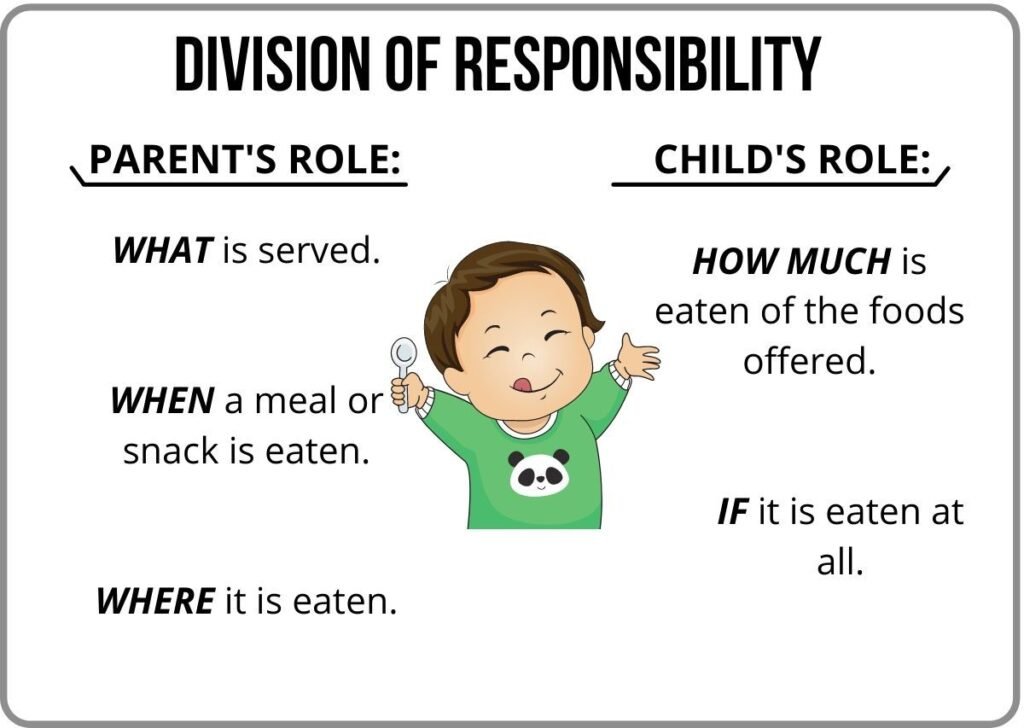
When it comes to feeding kids, there is a particular philosophy that many Dietitians suggest that involves a division of responsibility between parent and child.
Listen, I DO NOT HAVE KIDS of my own, so I cannot vouch for its practical effectiveness, but it goes a little something like this:
With the above in mind, the rule of thumb for offering snacks to kids would be:
- A few hours after one meal ends
- One to two hours before the next meal begins
What About Adults?
Do grown-ups need to snack too? And if so, when?
I talk to clients about this all the time, and the real answer is: it varies.
I often suggest avoiding going more than 5 hours without eating. If your meals are scheduled further apart than that, a snack is often very helpful.
Here are a few questions you might ask yourself when considering your own snack regimen:
- Are meals sufficient?
- How’s your hunger?
- How’s your energy?
- How’s your focus?
- Are you exercising?
- Are you getting cravings?
These factors can all be indicators of your need for additional energy.
Building a Better Snack (Without the Stress)
Probably most importantly, what should you actually eat?
If you’ve been reading my blog regularly, you know my stance: not every snack needs to be nutritious. If meals are balanced and sufficient, snacks can be more flexible.
However, it can help to be mindful when enjoying “treat” foods.
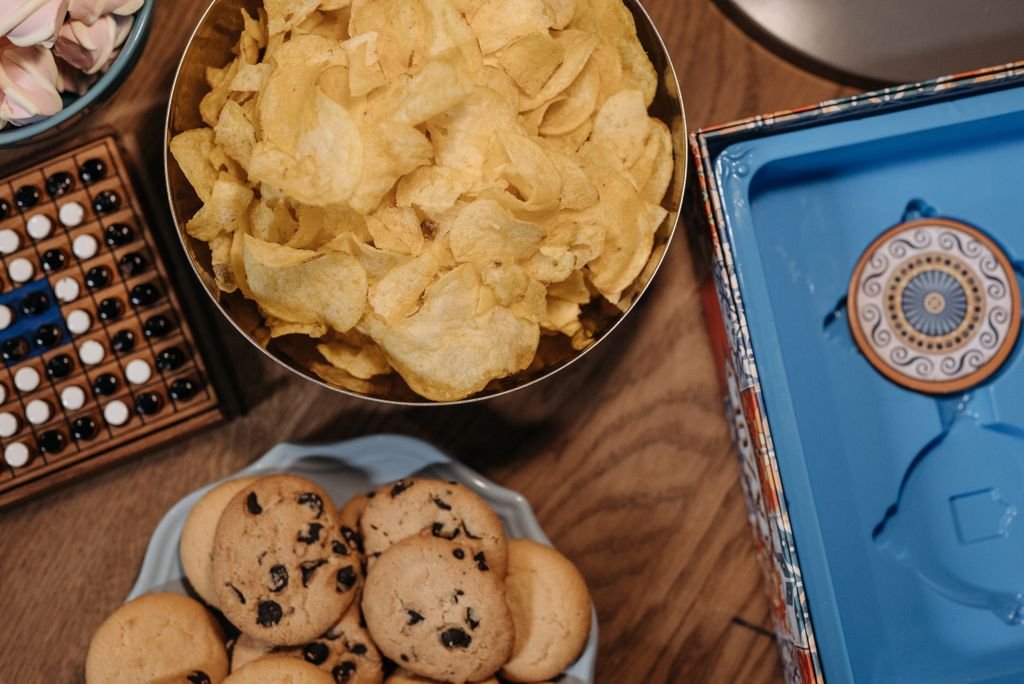
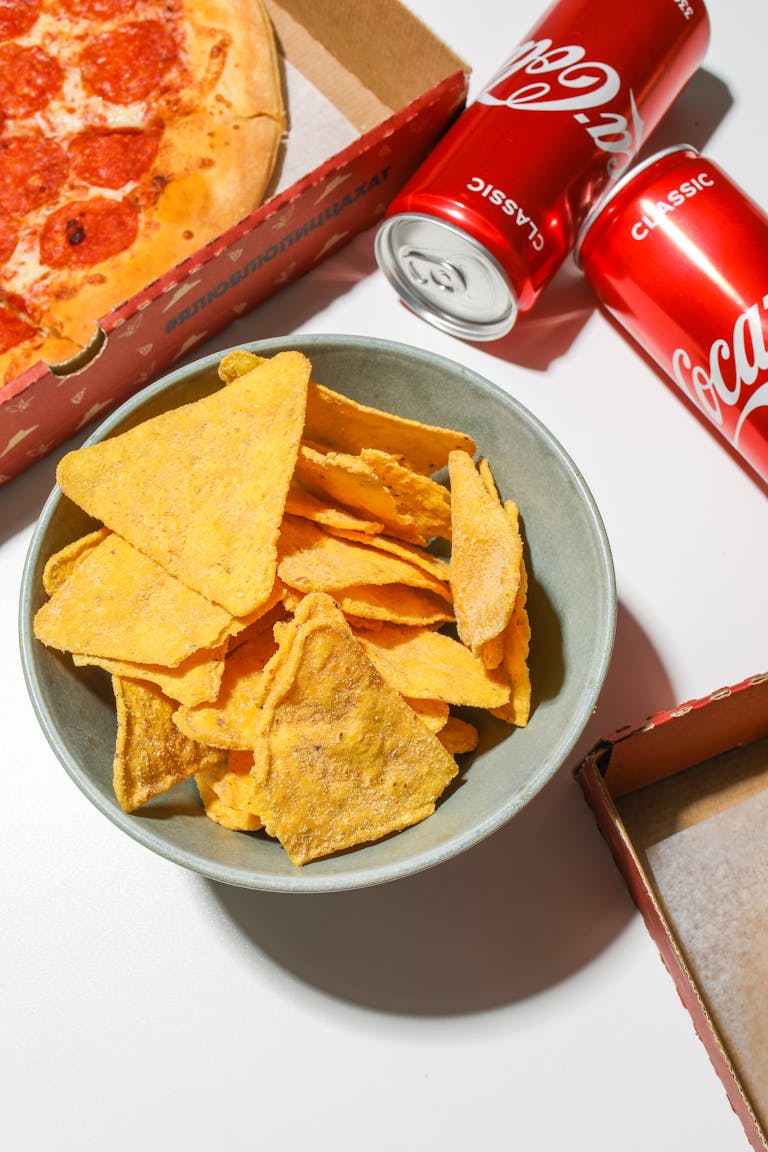
Many convenience snack foods such as chips, cookies, and candy don’t contribute much to our diet beyond energy. While eating a TASTY snack is a good idea some of the time, often it is worth considering how your snack can support your overall health.
Snacks provide an opportunity to incorporate nutrients that might otherwise be lacking in your diet: protein, vitamins and minerals, and fiber. Here are two quick principles to keep in mind:
- Treat snacks like mini-meals that deserve the same attention and planning as your regular meals.
- Aim to incorporate at least 2 food groups (ie: protein, carbohydrate, produce, fat) to create a balanced snack.
Quick Grab-and-Go Options
Snacks can be prepared ahead or made in the moment, and there are also MANY prepackaged options these days that work just fine:
PROTEINS:
- String cheese
- Yogurt cups or tubes
- Meat sticks or jerky
CARBOHYDRATES:
- Whole-grain crackers or pretzels
- Plain popcorn
- Roasted chickpeas
- Trail mix
- Energy bars, granola bars, or cereal bars
PRODUCE:
- Pre-washed fruit such as apples, pears, bananas, grapes, berries, or cut melon
- Single-serve cups of unsweetened applesauce or fruit cups
- Dried fruit
- Carrot and celery sticks, grape or cherry tomatoes, and other raw vegetables
FATS:
- Peanut butter, hummus, or guacamole (to use as a dip for vegetables or crackers)
- Unsalted nuts
- Fruit and nut bars
Finally,
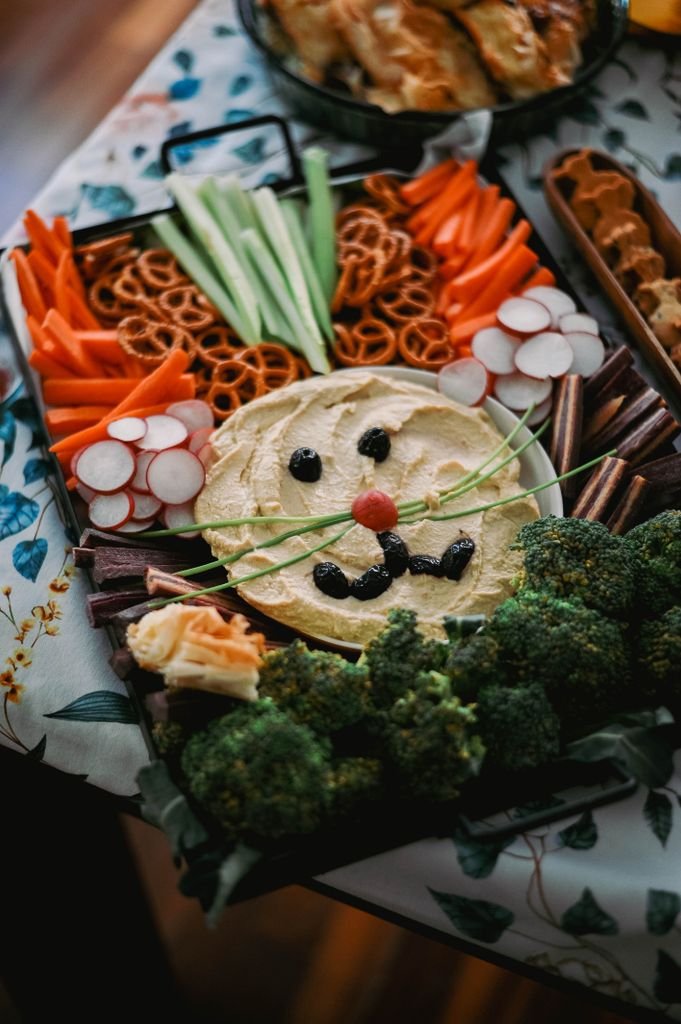
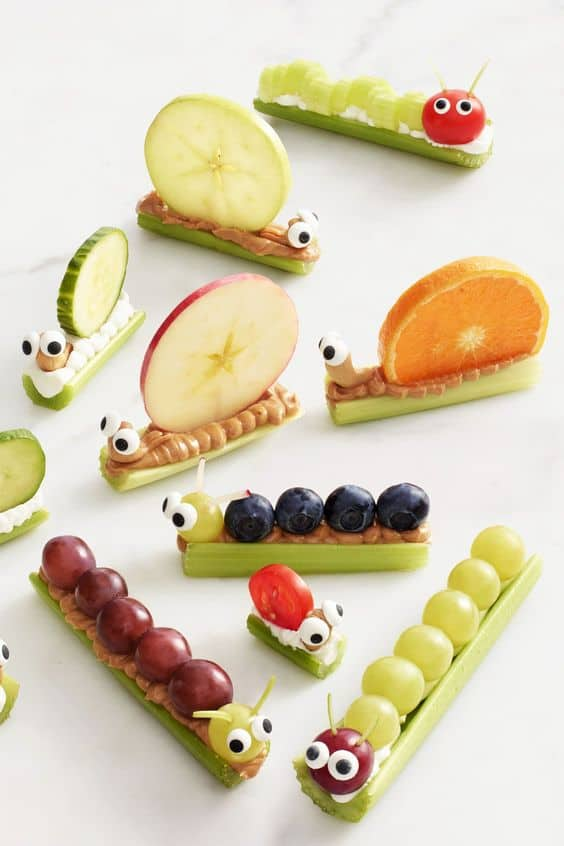
As I was doing research for my event, I came across lots of pictures of really adorable snacks that make nutritious foods FUN for kids.
While I love the idea of cutting whole-grain bread and fruit slices into shapes and arranging vegetables to look like animals, I know not everyone has time for that. Healthy snacks really can be very simple if you have some basics on hand. You also might find that a little bit of structure supports you as well.
If you feel like you could benefit from more in-depth, one-on-one nutrition counseling (and you live in IL), don’t hesitate to reach out!
Here’s to Happy Healthy Eating!