
I spent last week helping my mom to declutter her office space… something I could no doubt benefit from doing in my own life.
But it got me thinking: what would the equivalent look like when it comes to nutrition?
We’ve probably all seen the version where someone decides to “eat healthier” and starts by throwing out all the junk food in their kitchen.
Personally, I don’t think that’s quite it.
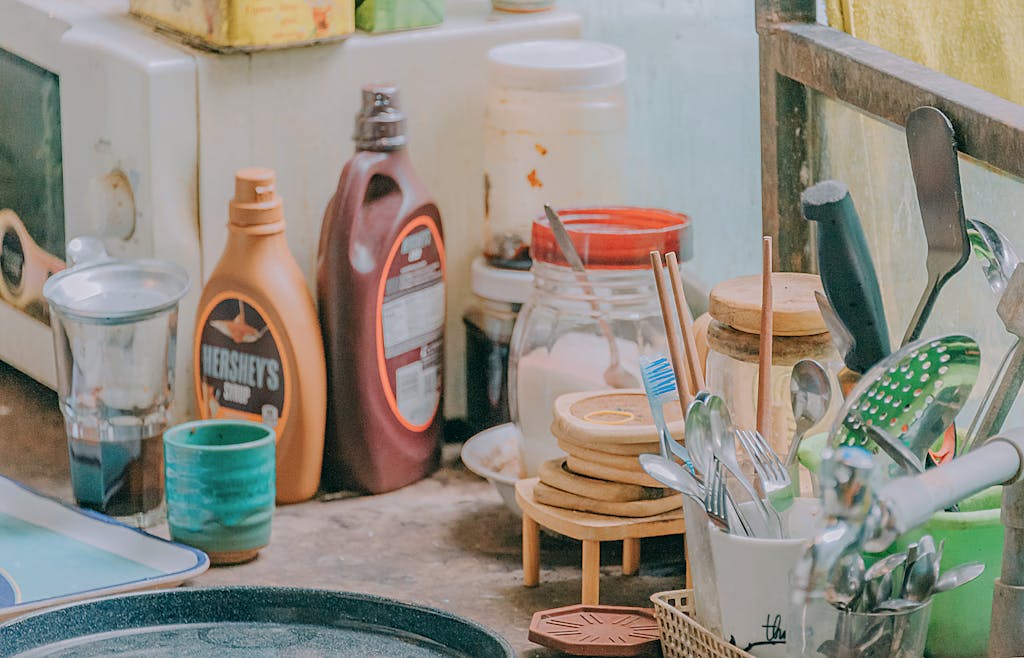
There’s also the more practical approach… clearing out food that’s been sitting in your pantry forever and clearly isn’t getting eaten. That actually can be helpful, in the same way it makes sense to donate clothes you haven’t worn in a year.
But the version of “dietary decluttering” I keep coming back to has less to do with your pantry… and more to do with your priorities.
Because at its core, decluttering is about deciding what matters…
…and letting go of what gets in the way.
Sometimes that does look like your physical space:
- Cleaning out your fridge so you can actually find your produce
- Getting rid of kitchen tools you never use so cooking feels easier
But sometimes, the clutter isn’t physical at all.
If your goal is to build a healthy, sustainable relationship with food…
…your clutter might be all the food rules you’ve picked up over the years.
Now, to be clear… I’m an advocate for balanced eating. I believe in including vegetables, beans, whole foods, all of it. But I also work with many people who feel completely overwhelmed by the sheer number of “rules” they’re trying to follow.

They’re afraid of carbohydrates, so they miss out on fiber and nutrients from foods like oatmeal, potatoes, and whole grain bread.
They avoid anything that tastes “too good,” but end up feeling pulled toward those foods anyway.
They get stuck in a cycle of trying to be “perfect,” then feeling like they’ve failed.
That’s what I mean when I’m talking about ‘clutter.’
And any mantra that makes you feel overwhelmed or prevents you from focusing on what really matters deserves to be tossed with the rest of your spring cleaning.
Here are just a few of the rules I hear all the time (and yes, I may have even believed or promoted some of these at one point):
- Protein is the most important macronutrient – you need more of it
- Carbohydrates will make you fat
- Always choose the low-fat version
- Sugar is addictive and toxic
- Don’t eat after 6pm
- Skip breakfast to increase your fasting window
- Just have a salad for lunch
- If you’re hungry, drink water
- You need 8 glasses of water every day
- Don’t drink your calories
- Avoid snacking
- Anything processed is bad
- Stay away from seed oils
- Get 5 servings of produce per day (okay, I do like this one… but if it’s stressing you out, let it go and we can revisit it later)
- Only eat organic produce
- Avoid GMOs
- Never eat fruit with other foods
- Eat foods in a specific order
- Chew gum to manage cravings
- Don’t keep “treat foods” in the house
As you read through this list… does anything stand out? Are there rules you’re holding onto that might not actually be serving you?
Just like decluttering your home, this isn’t about throwing everything away. And though I personally feel that most of the rules above are more likely to harm than help a relationship with food, some structure can be helpful. Some guidelines might genuinely support you. But you get to decide what stays and what goes.
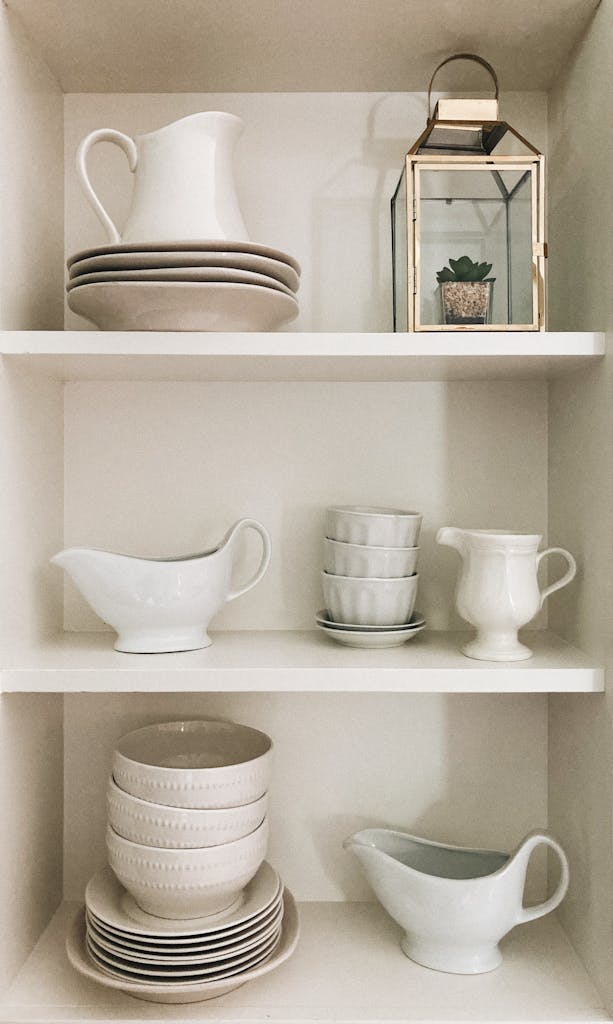
One person might keep the china gravy boat because it’s meaningful. Another might let it go because it never gets used.
Food rules can work the same way. The goal isn’t to have no structure… it’s to remove the noise so you can focus on what actually helps you feel well, nourished, and at peace with food.
This is definitely a bit of a work-in-progress metaphor for me, so I’d love your feedback… did this resonate? Or fall flat? Leave me a comment and let me know.
And if you’re interested in working through some of your own “food clutter,” I’d be happy to talk one-on-one. I’m currently accepting new clients in Illinois and am in-network with BCBSIL.
CLICK HERE to schedule a FREE consult